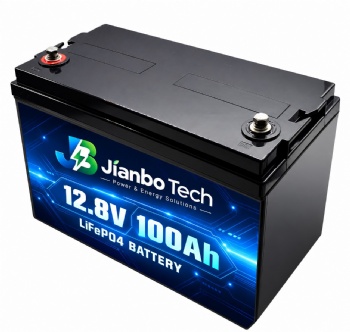
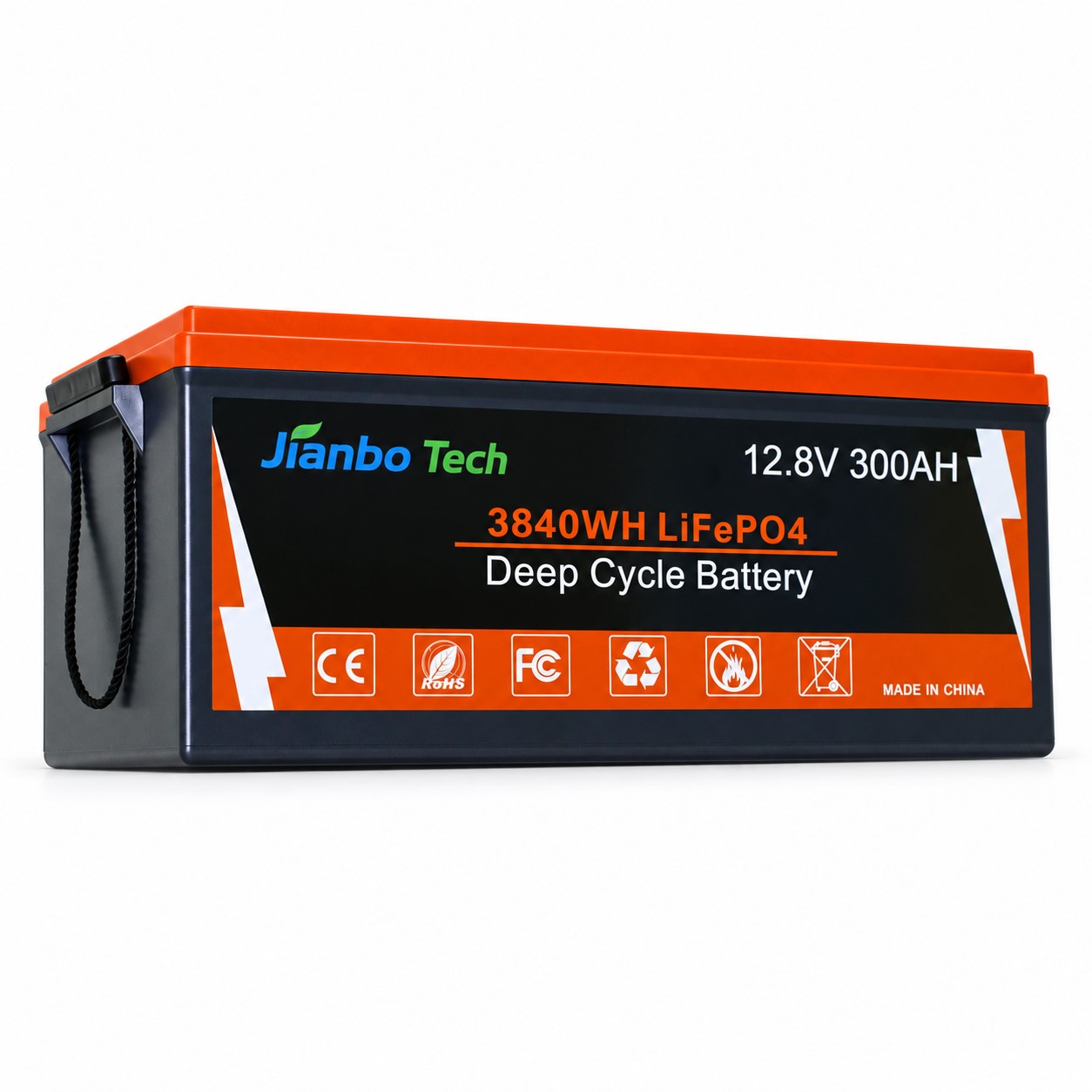
The Jianbo Tech 12.8V 300Ah LiFePO4 Battery delivers 3.84kWh of dependable energy storage for recreational vehicles, camper vans, solar systems, marine equipment and backup power applications.
With a maximum continuous discharge current of 200A, the battery can support compatible loads and inverter systems rated up to 2560W. Its long cycle life, high usable capacity and compact deep-cycle design make it a practical replacement for conventional lead-acid batteries in mobile and off-grid energy systems.
12.8V nominal voltage
300Ah rated capacity
3840Wh / 3.84kWh total energy
Maximum continuous charging current of 100A
Maximum continuous discharging current of 200A
Supports compatible loads and inverters up to 2560W
More than 2,000 cycles at 100% depth of discharge
Up to 5,000 cycles at 80% depth of discharge
Compact 520 × 269 × 220mm housing
Approximately 32kg battery weight
Suitable for deep-cycle and repeated charge-discharge applications
| Specification | Details |
|---|---|
| Product Type | LiFePO4 Deep-Cycle Battery |
| Brand | Jianbo Tech |
| Nominal Voltage | 12.8V |
| Rated Capacity | 300Ah |
| Rated Energy | 3840Wh / 3.84kWh |
| Recommended Charge Voltage | 14.2–14.6V |
| Maximum Continuous Charging Current | 100A |
| Maximum Continuous Discharging Current | 200A |
| Maximum Load / Inverter Power | 2560W |
| Cycle Life at 100% DoD | More than 2,000 cycles |
| Cycle Life at 80% DoD | Up to 5,000 cycles |
| Charging Temperature | 0°C to 50°C |
| Discharging Temperature | −20°C to 60°C |
| Storage Temperature | −10°C to 50°C |
| Dimensions | 520 × 269 × 220mm |
| Dimensions in Inches | 20.47 × 10.59 × 8.66in |
| Weight | 32kg / 70.54lb |
Provides stored energy for lighting, refrigerators, water pumps, communication devices, entertainment systems and compatible inverter-powered appliances in recreational vehicles, camper vans and caravans.
Suitable for small solar systems, cabins, remote equipment and other installations requiring a reliable 12V deep-cycle battery bank.
Can supply compatible onboard electronics, navigation equipment, lighting, pumps and other auxiliary loads in boats and small marine applications.
Suitable for communication equipment, emergency lighting, security systems and compatible low-voltage backup power installations.
The 300Ah capacity provides 3.84kWh of stored energy, offering longer operating time than lower-capacity 12V batteries.
A maximum continuous discharge current of 200A allows the battery to support compatible inverters and loads rated up to 2560W.
The battery provides more than 2,000 cycles at 100% depth of discharge and up to 5,000 cycles when operated at approximately 80% depth of discharge.
LiFePO4 chemistry is designed for repeated charging and discharging, making the battery suitable for mobile, renewable-energy and auxiliary-power applications.
The integrated battery housing provides substantial storage capacity while maintaining practical dimensions for RVs, boats and compact energy systems.
For safe and reliable operation:
Use a charger specifically compatible with LiFePO4 batteries.
Set the charging voltage within the recommended 14.2–14.6V range.
Keep the continuous charging current at or below 100A.
Keep the continuous discharging current at or below 200A.
Do not connect loads or inverters exceeding 2560W.
Confirm cable size, fuse rating and terminal capacity before installation.
Consult the supplier before making series or parallel connections.
Please provide the following details when requesting a quotation:
Required quantity
Destination country
Intended application
Charger specifications
Inverter power
Required series or parallel configuration
Branding and packaging requirements
Required certificates and shipping documents
OEM labels, customized branding and packaging are available subject to order quantity and technical confirmation.
This battery is designed for deep-cycle energy storage and auxiliary-power applications. It should not be used as an engine-starting battery unless the application has been technically reviewed and approved.
Actual operating time and cycle life depend on load power, depth of discharge, charging settings, ambient temperature and system configuration.